
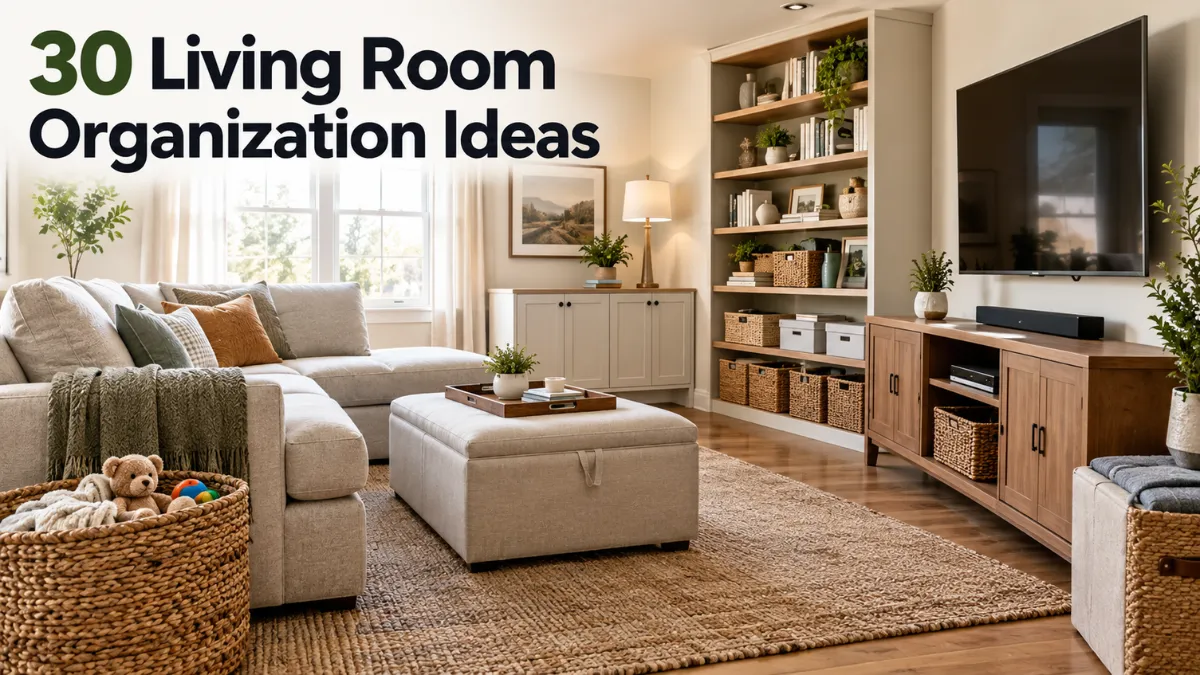
30 Living Room Organization Ideas for a Clutter-Free Home
A living room can look messy even when you tidy it every day. Toys, blankets, shoes, remotes, and everyday essentials seem to find their way onto every available surface. These 30 Living Room Organization Ideas cover smart storage, small-space solutions, family-friendly systems, and simple ways to keep clutter under control without making your room feel over-organized.
1. Living Room Closet Organization
Living room closets often become a catch-all for things you rarely use. Group similar items, add shelf baskets, and keep everyday essentials at eye level to make the space easier to manage. Reserve higher shelves for seasonal pieces and leave lower areas for items you reach for regularly.
2. Toy Organization
Kids’ toys can take over a living room surprisingly fast. Open baskets make cleanup simple, while a few labeled bins can keep puzzles, building sets, and small toys together. Keeping only a manageable selection available also makes tidying less overwhelming without making the room feel like a playroom.
3. Small Living Room Organization
Small living rooms need storage that works without crowding the floor. Think narrow shelving, storage ottomans, wall-mounted pieces, and furniture with hidden compartments. Keeping bulky items off the floor creates more visual breathing room and makes the room feel easier to move through, even when storage is limited.
4. Storage Solutions
Good living room storage solves clutter at its source rather than simply hiding it. Closed cabinets work well for visual clutter, while baskets are useful for frequently handled items. A mix of open and concealed storage gives you somewhere practical for everyday belongings without making the room look overly packed.
5. Game Console Organization
Gaming equipment quickly becomes messy when consoles, controllers, headsets, and cables share one area. A dedicated entertainment zone keeps everything together and makes the setup easier to maintain. Small containers for accessories and simple cable management can also keep the TV area looking tidy between gaming sessions.
6. Board Game Storage
Board games are easier to enjoy when you can actually find them. Group boxes by size, frequency of use, or type, and keep the games played most often within easy reach. Vertical storage can make better use of limited shelf space while keeping boxes visible instead of buried behind other items.
7. Shoe Organization
Shoes near the living room can create instant visual clutter, especially in homes without a separate entryway. A slim shoe rack, storage bench, or closed cabinet can keep pairs contained without taking over the room. Limit the area to shoes used regularly and move seasonal pairs elsewhere.
8. Blanket Storage
Blankets look cozy on a sofa until they become a pile nobody knows where to put. A large woven basket beside the seating area gives throws a convenient home while keeping them within reach. Storage ottomans and benches are useful alternatives when you prefer a more concealed look.
9. Room Shelf Organization
Open shelves can easily shift from stylish to cluttered when every inch is filled. Give books, baskets, decorative pieces, and plants some breathing room, and group smaller objects together instead of scattering them across every shelf. Keeping a little empty space can make the entire arrangement feel more intentional.
10. Rack Organization
Living room racks are useful for combining display and storage, but they work best when each section has a purpose. Keep heavier or less attractive items in baskets or lower shelves, while decorative pieces can stay more visible. This balance prevents an open rack from becoming a collection of random belongings.
11. Corner Storage Ideas
Awkward corners often become dead zones or accidental clutter spots. A slim corner shelf, tall cabinet, basket, or small storage unit can turn that unused space into something useful. Choose a solution that matches the room’s scale so the corner gains function without making the living room feel cramped.
12. Remote Control and Electronics Storage
Remote controls, chargers, batteries, and headphones are small, but they create a messy look when left scattered around the sofa. One small tray, drawer, or organizer can give these items a consistent home. Keeping only frequently used electronics nearby makes the storage system easier to maintain.
13. TV and Cable Organization
TV areas tend to collect more cables and accessories than expected. Grouping cords, labeling chargers, and keeping power strips contained can make a noticeable difference. Store gaming accessories and spare devices separately from everyday remotes so the entertainment area stays easier to clean and simpler to use.
14. Under-Sofa Storage
The space underneath a sofa is easy to overlook, yet it can hold items you do not need every day. Low-profile containers are useful for seasonal decor, extra linens, or rarely used accessories. Choose covered storage if dust is a concern, and measure the clearance before buying anything.
15. Sofa-Side Storage
The area beside a sofa can handle more than a side table. A narrow cabinet, basket, rolling cart, or small shelf can hold books, blankets, remotes, and other everyday items. The best option depends on what you naturally reach for while sitting, so storage stays convenient rather than decorative only.
16. Storage Furniture for the Living Room
Furniture can do double duty when storage space is limited. Coffee tables with compartments, ottomans with hidden storage, benches, and cabinets can hold useful items without adding another standalone organizer. Choosing pieces that solve two problems at once is especially helpful in smaller rooms where every square foot matters.
17. Book Organization
Books can make a living room feel warm and personal, but an overcrowded shelf quickly looks untidy. Sort books by category, size, or how often you use them, then mix them with a few decorative objects. Keep the arrangement flexible so new books have somewhere to go.
18. Everyday Item Storage
Everyday items such as keys, mail, bags, and chargers need a designated landing spot. Without one, they tend to migrate onto the coffee table, sofa, or nearest surface. A small tray, basket, drawer, or console section can keep these things contained and make daily cleanup much quicker.
19. Vertical Living Room Storage
Vertical storage is valuable when floor space is tight. Tall shelving, wall-mounted cabinets, and floating shelves can take advantage of unused wall area without reducing walking space. Keep heavier items lower and lighter pieces higher, and avoid filling every available section if you want the room to feel open.
20. Storage Bench Ideas
A storage bench can provide seating, organization, or both. It works well near a window, along a wall, or beneath a console-style setup, depending on the room. Use the hidden compartment for blankets, toys, games, or seasonal items, especially when you want everyday clutter out of sight.
21. Basket Organization
Baskets are one of the easiest ways to contain items that do not stack neatly. Use different sizes for blankets, toys, magazines, or electronics, but keep the system simple. A few well-placed baskets usually work better than filling every corner with containers that eventually become clutter themselves.
22. DIY Living Room Organization
DIY organization does not have to mean building an elaborate project. Repurposed crates, simple wall shelves, labeled boxes, or an old cabinet can solve specific storage problems with little effort. Start with something the room genuinely needs rather than adding a project simply because it looks good online.
23. Budget-Friendly Living Room Organization
Organizing a living room on a budget often starts with what you already own. Reuse baskets, boxes, jars, or unused furniture before buying new organizers. Rearranging existing storage, removing unnecessary items, and giving each category a home can sometimes make a bigger difference than spending money on more storage.
24. Aesthetic Living Room Organization
Organization can be practical without looking utilitarian. Woven baskets, attractive storage boxes, styled shelves, and furniture with concealed compartments can keep necessities within reach while supporting the room’s overall look. Choose storage materials and finishes that complement your existing furniture instead of treating organization as something separate from the decor.
25. Rustic Farmhouse Living Room Organization
Rustic farmhouse organization works best when storage feels warm and functional rather than overly themed. Woven baskets, wooden crates, simple cabinets, and vintage-inspired pieces can provide practical homes for everyday items. Keep the arrangement relaxed and useful, with enough open space to prevent the room from feeling visually heavy.
26. Office Organization
A living room office needs clear boundaries so work supplies do not spread across the entire space. A compact desk, vertical shelving, cable management, and a dedicated drawer or basket for paperwork can help. At the end of the workday, having a place to put everything away makes the room feel like a living space again.
27. Small Apartment Room Organization
Apartment living often means making one room serve several purposes. Look for furniture with hidden storage, narrow shelving, and pieces that can move or serve more than one function. Keeping storage concentrated around the areas where clutter actually appears helps a small apartment feel organized without filling it with bulky organizers.
28. Organization With Kids
Organization with kids works better when cleanup is easy enough for them to do independently. Keep toy baskets and everyday storage at accessible heights, use simple categories, and avoid systems with too many rules. The goal is not a perfectly styled room every minute; it is a setup the whole family can realistically maintain.
29. Decluttering
Adding more storage will not fix a living room filled with things nobody uses. Start by removing broken, duplicated, forgotten, or misplaced items. Once the excess is gone, you can see which storage problems actually remain and choose solutions based on real needs instead of trying to contain unnecessary clutter.
30. Living Room Organization Hacks
Living room organization hacks work best when they reduce small daily frustrations. Keep frequently used items close, store similar things together, label containers when helpful, and reset the room regularly. A simple system that fits your habits will usually last longer than an elaborate setup that looks impressive but takes too much effort.
Finding the Right Organization Ideas for Your Living Room
The best organization system depends on what actually creates clutter in your space. A small room may benefit most from vertical and hidden storage, while a family room may need accessible toy baskets and flexible storage. Start with the problem you notice most often, then choose one or two ideas that make that problem easier to manage.
Final Thoughts
A well-organized living room does not need to look perfectly styled or rely on expensive storage furniture. The most useful solutions give everyday items a clear home while keeping frequently used things easy to reach. These 30 Living Room Organization Ideas can help you reduce clutter, use your available space better, and create a room that feels easier to live in every day.